


When selecting a Telecentric Measurement System, do not focus on the specifications alone; instead, prioritise how well it suits your specific application. Choose a model based primarily on your required measurement accuracy, the size range of the objects to be measured and your production conditions, then narrow down your options by considering your budget and the equipment’s reliability. By doing so, you can avoid the vast majority of pitfalls.

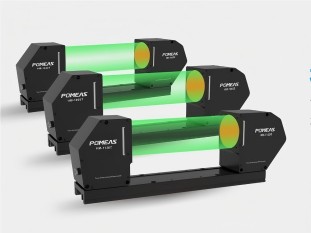
Many people fall into the trap of blindly pursuing top-of-the-range equipment with ultra-high precision and an ultra-wide field of view when selecting equipment. This either results in the budget being severely exceeded, leading to a waste of resources, or the specifications failing to match the actual production environment, causing issues such as missed or false detections and slowing down the production line. As a commonly used piece of equipment in industrial vision inspection, the core value of a Telecentric Measurement System lies in its ability to meet production requirements, rather than in a mere accumulation of technical specifications.

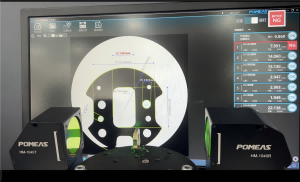
Step 1: identify the core measurement requirements, as this forms the basis for selecting the appropriate equipment. Firstly, determine the size range of the workpieces to be measured; the equipment’s field of view must fully cover the dimensions of the workpieces. If the field of view is insufficient, measurement errors are highly likely to occur, affecting inspection accuracy. Secondly, clarify the accuracy standards: for routine dimensional screening and visual inspection of standard components, equipment with conventional accuracy is sufficient; however, for micrometre-level inspection scenarios involving precision hardware and electronic components, high-precision imaging and advanced algorithms are required. It is also recommended to allow for a 10–20 per cent margin of error when selecting the level of precision to compensate for inspection errors caused by the workshop environment.

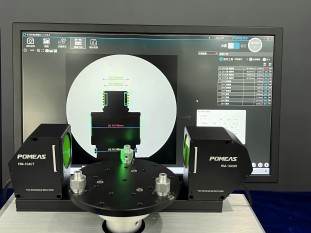
Step 2: Adapting to on-site production conditions. The operating rhythms and production environments of different production lines vary considerably. On automated production lines with faster conveyor speeds, particular attention must be paid to the equipment’s inspection frame rate to ensure that measurement efficiency keeps pace with the production line’s cycle time, thereby preventing a build-up of products awaiting inspection. Furthermore, factors such as fluctuations in workshop lighting, dust and minor vibrations can all affect image quality. In complex production environments, priority should be given to equipment that is resistant to interference, features built-in light adjustment and offers strong dust protection, in order to ensure the stability of inspection data.

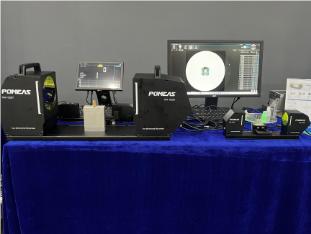
Step 3: Filter options based on your budget and long-term value. Provided that measurement accuracy, dimensional compatibility and suitability for operating conditions are met, keep procurement costs under reasonable control without blindly pursuing redundant specifications. Furthermore, do not focus solely on the unit purchase price; instead, prioritise the equipment’s operational stability, ease of calibration and universal compatibility. In scenarios involving long-term, high-frequency online monitoring, equipment with a low failure rate, simple operation and maintenance, and strong compatibility can significantly reduce subsequent production and maintenance costs.
Industry-wide empirical data provides clear evidence to support the selection criteria: industry statistics show that over 90 per cent of faults in online image measurement equipment stem from a mismatch between the application scenario and the equipment parameters during the initial phase; equipment selected in strict accordance with operating conditions, accuracy requirements and dimensional specifications can achieve a 38 per cent increase in overall stable operating time and reduce the rate of false negatives and missed detections by more than 45 per cent, thereby effectively enhancing production line inspection efficiency and product pass rates.
Product recommendation
TECHNICAL SOLUTION
MORE+You may also be interested in the following information
FREE CONSULTING SERVICE
Let’s help you to find the right solution for your project!
 ASK POMEAS
  PRICE INQUIRY
  REQUEST DEMO/TEST
  FREE TRIAL UNIT
  ACCURATE SELECTION
- APPICATION CASE
- RESOURCE CENTER
- DOWNLOAD CENTER
SOLUTIONS SUPPORT
- ZOOM LENS SELECTION TOOL
- TELECENTRIC LENS SELECTION TOOL
- FA LENS SELECTION TOOL
- ZOOM RATIO TABLE
- CERTIFIED MODEL
SELECTION TOOL
- WHY POMEAS
- FAQ
- PRIVACY POLICY
- TERMS OF USE
- DELIVERY & RETURN POLICY
CUSTOMER CARE
 ADDRESS
Add.:No.68, Yongwei Road, Baizhoubian, Dongcheng District, Dongguan, China,523000
CONTACT
 Tel:+ 86-0769-2266 0867
 Fax:+ 86-0769-2266 0867
 E-mail:marketing@pomeas.com

Wechat QR code

Software Copyright :2021SR0176001 抄袭必究, 技术支持:誉新源科技