


Seamless Switching Between Continuous Zoom, Rapid Positioning and Detailed Observation:

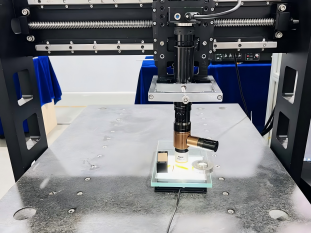
ZOOM LENSes allow for smooth magnification from low magnification (e.g. 0.7x) to high magnification (e.g. 4.5x) without altering the microscope’s working distance or refocusing (provided the ZOOM LENS has good coaxiality). For example, one might first scan the entire pollen sample at low magnification (20–40×) to quickly locate the target grains; then, by simply turning the zoom knob, switch to high magnification (100–400×) to observe key taxonomic features such as surface patterns and germination pores. This continuous process takes only a few seconds, whereas with fixed-magnification objectives, frequent objective changes are required, resulting in a significant difference in efficiency.
‘Optimal’ Magnification, Rather Than ‘Fixed’ Magnification:
Pollen grains vary considerably in size (from a few micrometres to over a hundred micrometres). A ZOOM LENS allows you to select a magnification for each type of pollen that is just sufficient to see the details clearly without restricting the field of view, rather than being limited to fixed magnifications such as 4x, 10x or 40x. This is particularly important for mixed pollen samples—it enables you to observe pollen grains of different sizes in turn, under optimal conditions, within a single field of view.
A Large Depth of Field and A Sense of Depth, Which Aid in Assessing Form:
Many ZOOM LENSES used for pollen examination are stereomicroscopes. They feature dual optical paths, producing images with a three-dimensional effect, which is extremely helpful for assessing the three-dimensional morphology of pollen (such as the true contours of spherical, ellipsoidal and triangular shapes). At the same time, the large depth of field at low magnifications ensures that pollen grains remain in focus even when there are slight differences in height, thereby reducing the need for frequent refocusing.
Long Working Distance, Easy to Operate:
Variable-magnification stereomicroscopes typically have a long working distance (the distance from the front of the objective to the specimen, which can exceed 50 mm). This makes it very convenient to use a microneedle to flip or manipulate individual pollen grains under the microscope, or to add reagents (such as chloroform hydrate or stains) using a pipette, without coming into contact with the objective. This is crucial when selecting individual pollen grains for slide preparation or micromanipulation.
Combining Digital Imaging and Measurement:
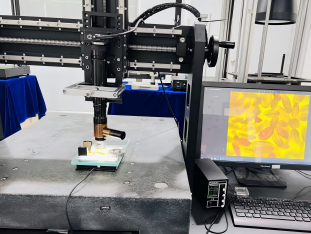
Modern ZOOM LENSES are frequently used in conjunction with high-resolution digital cameras. Through calibration, key measurements such as the polar axis length and equatorial axis length of pollen can be accurately determined at different magnifications. As the optical design of ZOOM LENSES ensures minimal image centre shift and controllable distortion across the entire zoom range, this provides a sound basis for automatic image stitching and measurement.
Conventional zoom stereomicroscopes (with a maximum magnification typically of around 45× objective × 10× eyepiece = 450×) may not offer sufficient resolution for observing submicroscopic structures on the surface of pollen grains (such as fine reticulate patterns and pitted patterns); in such cases, a compound objective is required. Consequently, the advantages of ZOOM LENSes lie primarily in rapid screening, stereotactic localisation and micromanipulation at low to medium magnifications; confirmation of the finest structures often requires the use of high-magnification compound objectives.
Product recommendation
TECHNICAL SOLUTION
MORE+You may also be interested in the following information
FREE CONSULTING SERVICE
Let’s help you to find the right solution for your project!
 ASK POMEAS
  PRICE INQUIRY
  REQUEST DEMO/TEST
  FREE TRIAL UNIT
  ACCURATE SELECTION
- APPICATION CASE
- RESOURCE CENTER
- DOWNLOAD CENTER
SOLUTIONS SUPPORT
- ZOOM LENS SELECTION TOOL
- TELECENTRIC LENS SELECTION TOOL
- FA LENS SELECTION TOOL
- ZOOM RATIO TABLE
- CERTIFIED MODEL
SELECTION TOOL
- WHY POMEAS
- FAQ
- PRIVACY POLICY
- TERMS OF USE
- DELIVERY & RETURN POLICY
CUSTOMER CARE
 ADDRESS
Add.:No.68, Yongwei Road, Baizhoubian, Dongcheng District, Dongguan, China,523000
CONTACT
 Tel:+ 86-0769-2266 0867
 Fax:+ 86-0769-2266 0867
 E-mail:marketing@pomeas.com

Wechat QR code

Software Copyright :2021SR0176001 抄袭必究, 技术支持:誉新源科技