


High-Resolution Telecentric Lenses: A Key Optical Solution for Micrometer-Level Precision Inspection
With the rapid development of smart manufacturing and the high-end electronics industry, dimensional inspection requirements in fields such as semiconductor packaging, microconnectors, and precision mechanical parts have now fully entered the micrometer range. Due to inherent perspective errors and optical distortions, traditional industrial lenses often struggle to provide a uniform and accurate measurement reference across the entire field of view. In this context, high-resolution telecentric lenses—with their unique parallel optical path design and superior optical resolution—are emerging as core optical components for building high-precision machine vision systems.

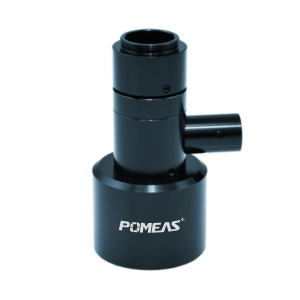
Telecentric Design, Eliminating Perspective Distortion
The fundamental characteristic of a telecentric lens is that its aperture is precisely positioned at the focal plane, allowing the principal rays to enter the lens parallel to the optical axis. This means that when the position or height of the object being measured shifts within the depth of field, the size of its image remains virtually unchanged. High-resolution telecentric lenses further limit the telecentricity angle to an extremely small value, effectively eliminating perspective errors caused by workpiece irregularities or mounting position deviations, thereby providing a fundamental guarantee of repeatability and measurement consistency for in-line batch inspection.
Ultra-high resolution, revealing the finest details
Resolution directly determines the accuracy of extracting minute features. High-resolution telecentric lenses typically utilize precision-ground low-dispersion glass and advanced multi-layer anti-reflective coating processes, enabling the optical system’s modulation transfer function to maintain excellent contrast even at high line pairs. When paired with 5-megapixel, 10-megapixel, or even higher-resolution industrial cameras, these lenses can clearly reproduce details such as chip lead widths, the fillet radii at the tips of microgears, and the edges of MEMS structures, providing robust raw images for sub-pixel edge localization and precise defect detection.
Ultra-low optical distortion ensures true-to-life imaging across the entire field of view
Conventional lenses often exhibit barrel or pincushion distortion at the edges of the field of view, causing the edges of objects to appear curved, which severely interferes with dimensional fitting and position determination. High-resolution telecentric lenses typically keep relative distortion at an extremely low level—some models even below 0.02%—resulting in virtually no distortion visible to the naked eye across the entire image frame. For measurement tasks with stringent requirements for edge straightness—such as BGA solder ball diameters, the aspect ratio of rectangular seals, and high-density pin pitches—this characteristic ensures that inspection results closely match the actual geometry of the object.
Balancing a Deep Depth of Field and High Resolution
Although telecentric optical systems offer the advantage of a constant magnification ratio, actual workpieces often have varying heights—for example, in the case of coplanarity inspection of connector pins. High-resolution telecentric lenses, through precise depth-of-field design and appropriate aperture matching, provide a reasonable working depth of field while maintaining high resolution. This ensures that features on planes at different heights can be clearly focused without changing the magnification ratio, thereby achieving a balance between clarity and measurement stability.
Typical Applications
- Semiconductor Wafer and Chip Inspection: For micron-level features such as die cut dimensions, RDL line width, and gold wire bonding, high-resolution telecentric lenses can be paired with high-magnification objective field-of-view to provide distortion-free, high-contrast images.
- Electronic Connectors and Lead Frames Measurement: In inspections such as terminal pitch, pin alignment, and coplanarity, these lenses completely eliminate vertical parallax, ensuring the precise imaging position of each pin.
- Precision Mechanical Parts: For the precise measurement of contour dimensions in micro-gears, nozzle micropores, watch components, and similar parts, the sharp edges rendered by high-resolution telecentric lenses significantly improve the accuracy of edge detection.
- LCD Panels and Solar Cells: In applications such as cell gap measurement and edge defect inspection, combining different magnification ratios allows for diverse field-of-view requirements to be met while maintaining resolution.
Product recommendation
TECHNICAL SOLUTION
MORE+You may also be interested in the following information
FREE CONSULTING SERVICE
Let’s help you to find the right solution for your project!
 ASK POMEAS
  PRICE INQUIRY
  REQUEST DEMO/TEST
  FREE TRIAL UNIT
  ACCURATE SELECTION
- APPICATION CASE
- RESOURCE CENTER
- DOWNLOAD CENTER
SOLUTIONS SUPPORT
- ZOOM LENS SELECTION TOOL
- TELECENTRIC LENS SELECTION TOOL
- FA LENS SELECTION TOOL
- ZOOM RATIO TABLE
- CERTIFIED MODEL
SELECTION TOOL
- WHY POMEAS
- FAQ
- PRIVACY POLICY
- TERMS OF USE
- DELIVERY & RETURN POLICY
CUSTOMER CARE
 ADDRESS
Add.:No.68, Yongwei Road, Baizhoubian, Dongcheng District, Dongguan, China,523000
CONTACT
 Tel:+ 86-0769-2266 0867
 Fax:+ 86-0769-2266 0867
 E-mail:marketing@pomeas.com

Wechat QR code

Software Copyright :2021SR0176001 抄袭必究, 技术支持:誉新源科技