


In real-world industrial production environments, the challenges faced by vision systems go far beyond simply “seeing fine details.” Specular reflections on the surfaces of metal workpieces, variations in lighting caused by mixed-material production lines, and mechanical vibrations from continuously operating conveyor equipment can all become “pitfalls” that compromise imaging stability. An excellent industrial vision inspection lens must not only deliver outstanding optical performance but also maintain reliable performance in complex environments.

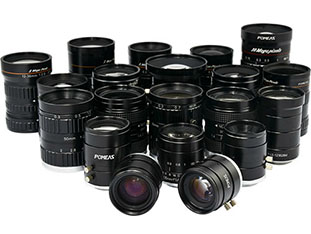
With their large-aperture design, robust mechanical construction, and specialized coating processes, industrial fixed-focus lenses are the ideal choice for complex on-site environments.
I. With Large Aperture Support, It Handles Low-Light and High-Speed Shooting with Ease
On high-speed assembly lines, cameras often require extremely short exposure times (in the microsecond range) to capture a still image of a moving workpiece. If the lens does not let in enough light in such situations, the image will appear noticeably dark; however, forcing the camera to increase gain will introduce noise. Industrial fixed-focus lenses designed with large apertures—such as F1.6 or even F1.4—can significantly increase the amount of light entering the camera, allowing it to capture bright, low-noise images even with short exposure times. This is particularly critical for applications such as defect detection during lithium-ion battery winding and high-speed component positioning in SMT placement machines.
II. Mitigating Reflections and Stray Light: Multi-layer Coatings and Polarization Matching
Workpieces such as metal parts, laminated packaging, and glass covers are prone to localized high reflectivity, which can cause image overexposure or reduced contrast. High-quality industrial lenses feature multi-layer anti-reflective coatings that effectively reduce internal reflections between lens elements, suppressing glare and ghosting. Additionally, some lenses feature a polarizer mount, allowing for the optional installation of a polarizing filter to further eliminate specular reflections from non-metallic surfaces and reveal the true texture of the workpiece. This capability significantly improves detection success rates when inspecting thread defects on highly reflective metal screws or character markings on electronic components.
III. Vibration-Resistant Design and Flexible Interface Compatibility
On automated production lines, it is difficult to completely avoid vibrations from conveyor belts and impacts from robotic arms. If a lens is not specifically designed for such environments, it may experience focus drift or image jitter. Industrial fixed-focus lenses feature an all-metal barrel and a high-strength threaded structure, with lens elements securely fastened via precision adhesive bonding or retaining rings for enhanced impact resistance. They are also equipped with dual locking mechanisms for both focus and aperture, which rigidly lock into place once adjusted, ensuring stable parameters during prolonged operation. In terms of mounting, these lenses are compatible with the common C-mount, allowing for direct replacement of existing lenses and reducing the complexity of system upgrades.
Key Application Scenarios:

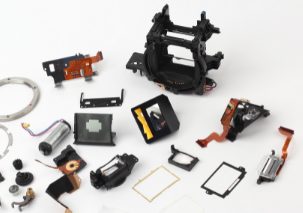
Whether in lithium-ion battery manufacturing, 3C electronics, automotive parts, or food and beverage packaging inspection, industrial fixed-focus lenses deliver clear, stable images even in environments with complex lighting conditions and vibrations. They serve as indispensable tools for vision engineers tackling on-site challenges and play a crucial role in enhancing the reliability of automated production line inspections.
Product recommendation
TECHNICAL SOLUTION
MORE+You may also be interested in the following information
FREE CONSULTING SERVICE
Let’s help you to find the right solution for your project!
 ASK POMEAS
  PRICE INQUIRY
  REQUEST DEMO/TEST
  FREE TRIAL UNIT
  ACCURATE SELECTION
- APPICATION CASE
- RESOURCE CENTER
- DOWNLOAD CENTER
SOLUTIONS SUPPORT
- ZOOM LENS SELECTION TOOL
- TELECENTRIC LENS SELECTION TOOL
- FA LENS SELECTION TOOL
- ZOOM RATIO TABLE
- CERTIFIED MODEL
SELECTION TOOL
- WHY POMEAS
- FAQ
- PRIVACY POLICY
- TERMS OF USE
- DELIVERY & RETURN POLICY
CUSTOMER CARE
 ADDRESS
Add.:No.68, Yongwei Road, Baizhoubian, Dongcheng District, Dongguan, China,523000
CONTACT
 Tel:+ 86-0769-2266 0867
 Fax:+ 86-0769-2266 0867
 E-mail:marketing@pomeas.com

Wechat QR code

Software Copyright :2021SR0176001 抄袭必究, 技术支持:誉新源科技