


In machine vision inspection, lighting conditions are often the most significant variable. Whether it’s glare from the surface of metal workpieces, variations in brightness on an assembly line caused by differences in material properties, or even extremely short exposure times during high-speed imaging, all of these factors pose a severe challenge to a lens’s light transmission capabilities. If gain is forced to be increased in low-light conditions to capture an image, this often leads to a significant increase in noise, which can compromise the accuracy of the inspection results.

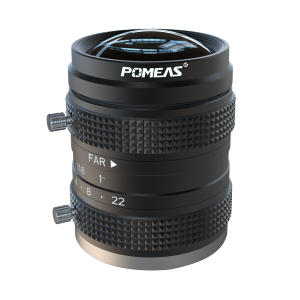
In the face of these challenges, large-aperture FA lenses, with their exceptional light-gathering capabilities and compatibility, have become a key tool for solving visual inspection challenges in complex lighting conditions.
I. Wide-aperture Design, Ready for Low-Light Challenges
The aperture, often referred to as the lens’s “pupil,” directly determines the amount of light entering the camera per unit of time. In applications such as lithium-ion battery weld seam inspection and the capture of high-speed moving objects, cameras often require extremely short exposure times to freeze motion. In such cases, if the lens aperture is not wide enough (e.g., below F2.8), the image is likely to appear dark.
FA lenses featuring a large aperture design (such as F1.6 or even F1.4) can significantly enhance image brightness. A larger aperture means that, under the same lighting conditions, the camera can use lower gain, resulting in raw images with less noise and higher contrast. This is undoubtedly a significant advantage for algorithms that rely on image details, such as OCR character recognition and edge detection.
II. Multi-layer Coating and Locking Mechanism: A Guarantee of Quality
In practical applications, wide-aperture lenses must not only ensure sufficient brightness but also mitigate the effects of stray light. High-quality FA lenses are typically equipped with multi-layer anti-reflective coatings that effectively suppress flare and ghosting, maintaining image clarity and high contrast even when facing highly reflective metal surfaces or intense point light sources.
Furthermore, for variable-aperture applications, these lenses are equipped with manual aperture lock screws. Engineers can flexibly adjust the aperture size based on on-site lighting conditions (for example, adjusting from F1.6 to F5.6 to achieve a greater depth of field). Once adjusted, the locking mechanism secures the aperture, ensuring that settings remain unchanged even in the vibration-prone environment of a production line.
III. Scientific Selection and Matching
When selecting a camera for a project, higher pixel count isn’t necessarily better; it’s all about “matching.” For cameras with sensor sizes of 2/3 inch or smaller, wide-aperture lenses with 5 or 10 megapixels often offer the best value for money. For example, wide-aperture lenses with focal lengths of 16mm or 25mm can meet working distance requirements while delivering distortion rates as low as -0.35%, making them ideal for applications such as electronic component sorting and food and pharmaceutical packaging inspection.
Key Application Scenarios:

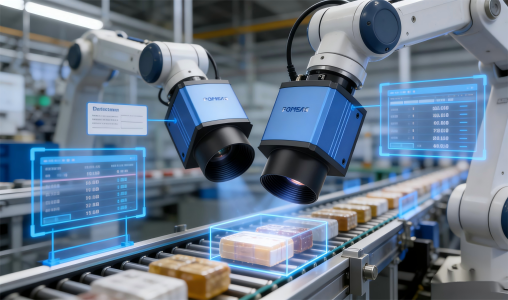
Whether used for positioning and guidance in dimly lit factory environments or for defect detection on high-speed assembly lines, large-aperture FA lenses deliver bright, clear images. Combined with a precise mechanical locking mechanism, they provide consistently stable imaging for vision systems.
Product recommendation
TECHNICAL SOLUTION
MORE+You may also be interested in the following information
FREE CONSULTING SERVICE
Let’s help you to find the right solution for your project!
 ASK POMEAS
  PRICE INQUIRY
  REQUEST DEMO/TEST
  FREE TRIAL UNIT
  ACCURATE SELECTION
- APPICATION CASE
- RESOURCE CENTER
- DOWNLOAD CENTER
SOLUTIONS SUPPORT
- ZOOM LENS SELECTION TOOL
- TELECENTRIC LENS SELECTION TOOL
- FA LENS SELECTION TOOL
- ZOOM RATIO TABLE
- CERTIFIED MODEL
SELECTION TOOL
- WHY POMEAS
- FAQ
- PRIVACY POLICY
- TERMS OF USE
- DELIVERY & RETURN POLICY
CUSTOMER CARE
 ADDRESS
Add.:No.68, Yongwei Road, Baizhoubian, Dongcheng District, Dongguan, China,523000
CONTACT
 Tel:+ 86-0769-2266 0867
 Fax:+ 86-0769-2266 0867
 E-mail:marketing@pomeas.com

Wechat QR code

Software Copyright :2021SR0176001 抄袭必究, 技术支持:誉新源科技