


What contributions have Telecentric lenses made to the field of measurement?

1. Fundamentally eliminates parallax error
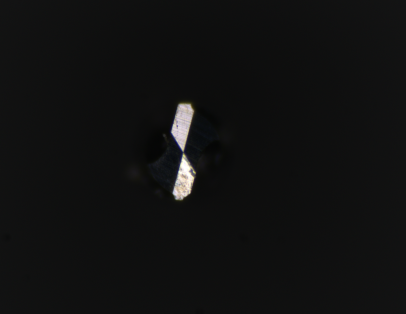
This is the most significant advantage of a telecentric lens. In traditional lenses, the closer an object is to the lens, the larger it appears in the image (i.e., objects appear larger when closer and smaller when farther away), which can lead to measurement errors due to slight variations in the object’s thickness or its position relative to the lens.
Advantage: Telecentric lenses feature a special optical path design that allows only main rays that are approximately parallel to the optical axis to enter the lens. As a result, regardless of whether an object is positioned closer to or farther from the lens within the working distance range, its image size on the image sensor remains virtually unchanged. This is crucial for measuring objects with thickness—such as screws, washers, and electronic component pins—ensuring that the measured value represents the object’s true projected dimensions rather than those distorted by perspective.
2. Ensures measurement accuracy across the entire field of view
Conventional lenses typically suffer from distortion (especially at the edges of the image), and the magnification at the edges often differs from that at the center.
Advantages: High-quality telecentric lenses feature extremely low distortion (typically well below 0.1%). They ensure that the magnification remains consistent across both the center and edges of the field of view. This means that as long as an object is within the field of view, measurement results will be consistent regardless of its position in the image, making them ideal for applications requiring large-area inspection or simultaneous inspection of multiple locations.
3. Enhanced Clarity and Stability Across the Depth of Field
Benefit: Although the aperture of a telecentric lens is typically small, this actually results in a greater depth of field. Within the depth of field, images not only maintain their size but also remain equally sharp. This enables clear, holistic imaging of objects with varying heights—such as components on circuit boards or uneven mechanical parts—while avoiding edge blurring and measurement errors caused by misalignment.
4. Improved Image Contrast and Edge Sharpness for Easier Image Processing
Contribution: Due to their parallel optical path design, telecentric lenses effectively capture direct light from the object, minimizing the impact of stray light. The resulting images feature extremely high contrast and very sharp edge contours. For measurement software, clear edges mean more precise and stable localization of sub-pixel boundaries, thereby improving measurement repeatability and stability.
5. Maintains consistency of measurement results in complex environments
Contribution: As you mentioned, it performs exceptionally well in complex environments. Such environments may include: varying angles of illumination, different reflective properties of the measured objects, or slight vibrations and tilts of objects on the production line. Through its unique optical characteristics, the telecentric lens minimizes the interference of these external factors on measurement results, making the measurement system more robust.
Product recommendation
TECHNICAL SOLUTION
MORE+You may also be interested in the following information
FREE CONSULTING SERVICE
Let’s help you to find the right solution for your project!
 ASK POMEAS
  PRICE INQUIRY
  REQUEST DEMO/TEST
  FREE TRIAL UNIT
  ACCURATE SELECTION
- APPICATION CASE
- RESOURCE CENTER
- DOWNLOAD CENTER
SOLUTIONS SUPPORT
- ZOOM LENS SELECTION TOOL
- TELECENTRIC LENS SELECTION TOOL
- FA LENS SELECTION TOOL
- ZOOM RATIO TABLE
- CERTIFIED MODEL
SELECTION TOOL
- WHY POMEAS
- FAQ
- PRIVACY POLICY
- TERMS OF USE
- DELIVERY & RETURN POLICY
CUSTOMER CARE
 ADDRESS
Add.:No.68, Chongwei Road, Baizhoubian, East district, Dongguan, China, 523000
CONTACT
 Tel:+ 86-0769-2266 0867
 Fax:+ 86-0769-2266 0867
 E-mail:marketing@pomeas.com

Wechat QR code

Software Copyright :2021SR0176001 抄袭必究, 技术支持:誉新源科技