


Common Pitfalls in Selecting Industrial Cameras for Machine Vision Applications
Having worked in optics for over a decade, I’ve handled at least several hundred vision projects. I’ve noticed that many engineers—especially those new to the field—tend to make some “assumptive” mistakes when selecting components. Today, I’d like to share some of the pitfalls I’ve encountered, using a few real-world examples.

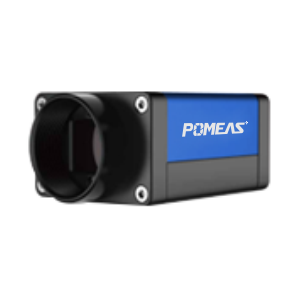
Let me start with a case study on cosmetic defect inspection. A client manufactures smartphone mid-frames and needed to detect scratches and dents. Since these are highly reflective metal parts, the standard approach is to use a high-resolution monochrome camera with coaxial lighting. However, during on-site debugging, we found that low-angle ring lighting actually produced better results—it highlighted the three-dimensional texture of fine scratches while darkening the background. This case reminded me that selecting the right light source is more critical than camera resolution—don’t just focus on pixel count right off the bat.
Here’s another case involving assembly verification. During the inspection of automotive engine bolts, a color camera was used on-site to distinguish bolts with different plating finishes, and the results were promising. However, the engineer made a mistake: to save time, they enabled automatic white balance. As a result, color shifts occurred across different batches, leading to misidentification. It wasn’t until they fixed the color temperature and calibrated using a standard color chart that the results stabilized. This was a hard-learned lesson: white balance on color cameras must be fixed in industrial settings.
Here’s an even more typical example involving barcode recognition. The micro QR codes on PCBs suffered from severe glare. The engineer selected a global shutter monochrome camera but used a standard C-mount lens, which lacked sufficient edge resolution, making it impossible to read the small codes. After switching to a high-resolution industrial lens from POMEAS, the problem was immediately resolved. Many people overlook the importance of matching the lens and camera, assuming that high pixel count is sufficient; in reality, the lens’s resolution must exceed the camera’s limit.
Finally, regarding dimensional measurement: inspecting the inner and outer diameters of bearings requires micron-level precision. Some users initially used a line-scan camera with a backlight, but failed to account for vibration and ambient light interference. After switching to a telecentric lens with a strobe light, combined with sub-pixel algorithms, the specifications were finally met. In measurement applications, lens distortion and light source stability are critical factors; many failures stem from neglecting these aspects.
There are no shortcuts in product selection, but avoiding these “assumptions” can save you a lot of unnecessary detours.
Product recommendation
TECHNICAL SOLUTION
MORE+You may also be interested in the following information
FREE CONSULTING SERVICE
Let’s help you to find the right solution for your project!
 ASK POMEAS
  PRICE INQUIRY
  REQUEST DEMO/TEST
  FREE TRIAL UNIT
  ACCURATE SELECTION
- APPICATION CASE
- RESOURCE CENTER
- DOWNLOAD CENTER
SOLUTIONS SUPPORT
- ZOOM LENS SELECTION TOOL
- TELECENTRIC LENS SELECTION TOOL
- FA LENS SELECTION TOOL
- ZOOM RATIO TABLE
- CERTIFIED MODEL
SELECTION TOOL
- WHY POMEAS
- FAQ
- PRIVACY POLICY
- TERMS OF USE
- DELIVERY & RETURN POLICY
CUSTOMER CARE
 ADDRESS
Add.:No.68, Yongwei Road, Baizhoubian, Dongcheng District, Dongguan, China,523000
CONTACT
 Tel:+ 86-0769-2266 0867
 Fax:+ 86-0769-2266 0867
 E-mail:marketing@pomeas.com

Wechat QR code

Software Copyright :2021SR0176001 抄袭必究, 技术支持:誉新源科技