


Industrial Camera Interface Overview: Key Selection Factors and Compatible Applications
The industrial camera interface serves as the “hub” connecting optics, data, and power, directly impacting imaging accuracy, transmission efficiency, and system stability.

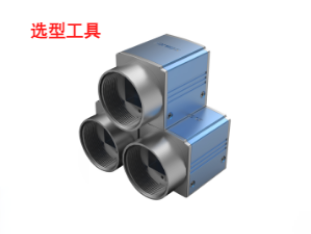
I. Lens Mount: The “Physical Foundation” of Precision Alignment
- C/CS Mount: International standard 1-inch threaded mount. C-mount flange focal distance is 17.5mm, while CS-mount is 12.5mm. CS-mount cameras can be adapted to C-mount lenses via a 5mm adapter ring, but reverse compatibility is not supported. Suitable for 3C electronics inspection, PCB board inspection, and similar applications.
- M-Series Mount: M12 mount with a 12mm diameter, designed for miniature cameras; M42/M58 interfaces feature larger sensor areas, commonly used for line scan cameras or wafer inspection.
- Snap-in Series (F/V Interfaces): F interface follows Nikon standard, often used for large industrial cameras; V interface follows Schneider standard, commonly found in microscope lenses.
- Adapter Ring Compatibility: Different interfaces can be made compatible via adapter rings, but ensure flange distances match to prevent blurred imaging.
II. Data Interface: The “Digital Arteries” of High-Speed Transmission
1. Gigabit Ethernet Interface (GigE)
Applications: General industrial vision tasks such as assembly inspection, positioning guidance, and packaging inspection, as well as industrial environments requiring high-speed transmission and long-distance cabling.
2. HDMI Interface
Applications: High-end display devices, multimedia presentations, medical imaging systems, and other scenarios demanding high-quality video output. In industrial cameras, HDMI interfaces can connect to director monitors or other display devices to show photos and video files captured by the camera, or link to handheld stabilizers to mitigate camera shake.
3. VGA Interface
Suitable for: Industrial inspection, medical testing, semiconductor inspection, precision measurement, and similar fields. Industrial cameras with VGA interfaces can connect to VGA image capture cards for image acquisition, analysis, and processing, making them ideal for industrial settings requiring real-time image transmission and display.
III. Power Interface: The “Invisible Support” for Energy Supply
- Independent Power Interface: Powered via DC interface for stable and reliable operation, suitable for scenarios with high power demands (e.g., laser welding monitoring).
- PoE Power Supply: Simultaneously transmits data and electricity through network cables, supporting power delivery up to 100 meters to simplify production line cabling (e.g., logistics sorting systems).
- USB Power Supply: USB 3.0 port provides direct power with limited capacity (typically ≤4.5W), suitable for low-power cameras (e.g., miniature endoscopes).
Product recommendation
TECHNICAL SOLUTION
MORE+You may also be interested in the following information
FREE CONSULTING SERVICE
Let’s help you to find the right solution for your project!
 ASK POMEAS
  PRICE INQUIRY
  REQUEST DEMO/TEST
  FREE TRIAL UNIT
  ACCURATE SELECTION
- APPICATION CASE
- RESOURCE CENTER
- DOWNLOAD CENTER
SOLUTIONS SUPPORT
- ZOOM LENS SELECTION TOOL
- TELECENTRIC LENS SELECTION TOOL
- FA LENS SELECTION TOOL
- ZOOM RATIO TABLE
- CERTIFIED MODEL
SELECTION TOOL
- WHY POMEAS
- FAQ
- PRIVACY POLICY
- TERMS OF USE
- DELIVERY & RETURN POLICY
CUSTOMER CARE
 ADDRESS
Add.:No.68, Chongwei Road, Baizhoubian, East district, Dongguan, China, 523000
CONTACT
 Tel:+ 86-0769-2266 0867
 Fax:+ 86-0769-2266 0867
 E-mail:marketing@pomeas.com

Wechat QR code

Software Copyright :2021SR0176001 抄袭必究, 技术支持:誉新源科技