


FA Lens Case Study | Quality Inspection of Printed Characters, Barcodes, and Colors
In industries such as food and pharmaceuticals, packaging, and printing, the standardization of printed characters, barcodes, and colors directly determines product compliance, traceability accuracy, and brand recognition. Defects like ink skips on characters, incomplete barcodes, or color deviations—though seemingly minor—can lead to product recalls, distribution disruptions, or even safety liability disputes due to failed traceability. Traditional manual inspection is constrained by visual fatigue and subjective judgment variations, making it difficult to adapt to high-speed production lines and stringent industry standards.

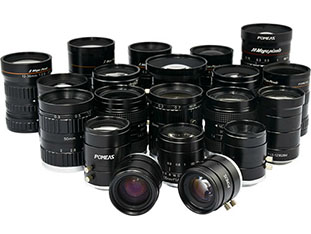
Core Inspection Scenarios: Optical Solutions for Three Major Pain Points


Print quality inspection must simultaneously overcome three core challenges: precise detection of minute character defects, clear identification of barcodes during high-speed movement, and quantitative assessment of color deviations—all while adapting to diverse printing substrates including paper, plastic, and metal. The POMEAS FA lens family (high-resolution fixed-focus, telecentric, and macro series) achieves comprehensive coverage and breakthrough detection accuracy through precisely matched optical parameters combined with synergistic lighting design.
Scenario 1: High-Precision Inspection of Printed Characters (Ink Deficiency, Misprinting, Misalignment)

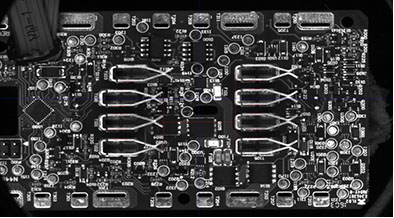
Production dates, batch numbers, expiration dates on food and pharmaceutical packaging, as well as model identifications on electronic components, often present inspection challenges such as minimum font sizes ≤2.5mm, complex printing backgrounds, and reflective materials.
POMEAS employs an 8-megapixel high-resolution fixed-focus FA lens as its core, paired with an external red coaxial light source and AI character recognition algorithms, achieving triple technical optimization:
First, high-resolution imaging (pixel precision of 0.016mm) clearly captures character edge details, accurately identifying defects like ink skips, broken strokes, and ink bleeds at the 0.1mm level, ensuring precise character positioning;
Second, low distortion design (TV distortion ≤0.01%) prevents misjudgments caused by character image distortion, making it particularly suitable for micro-character inspection scenarios;
Third, anti-glare optimization synergizes multi-layer anti-reflective lens coatings with coaxial lighting to effectively suppress reflections from plastic and metal surfaces, ensuring clear character imaging against both matte and high-gloss backgrounds.
Scenario 2: Full-Dimensional Barcode Inspection (Damaged, Blurred, or Failed Association)

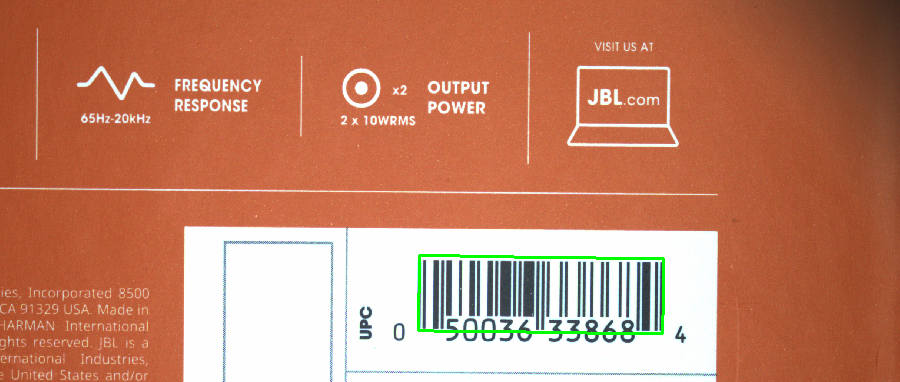
As the core carriers for product traceability, 1D and 2D barcodes must meet stringent requirements: a scan success rate ≥99.8% (compliant with GS1 standards) and a width tolerance of ±0.1mm. Traditional inspection solutions are susceptible to barcode printing inconsistencies, surface contamination, and production line vibrations, leading to scanning failures or incorrect data association. Additionally, their inspection speed is limited (typically ≤200 items/minute), making them ill-suited for modern high-speed production lines.
POMEAS introduces a targeted solution combining telecentric and fixed-focus FA lenses. Its core utilizes a 0.17X high-resolution telecentric lens paired with a Gigabit Ethernet high-speed camera to achieve comprehensive barcode inspection:
First, the telecentric optical design eliminates perspective distortion, ensuring precise measurement of barcode width and height. Accurate recognition is maintained even with slight tilting, preventing scanning failures due to dimensional deviations.
Second, high-frame-rate adaptation (0.3s/pcs high-speed capture) synchronized with strobe lighting triggers effectively suppresses motion blur caused by production line vibrations, ensuring clear barcode imaging during high-speed movement.
Third, full code compatibility supports over 20 common barcode types including Data Matrix and QR codes. It automatically verifies consistency between barcodes and serial numbers, eliminating risks of association failures.
Scenario 3: Accurate Color Detection in Printing (Color Difference, Uniformity)

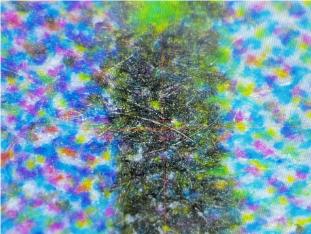
Color accuracy in food and pharmaceutical packaging and brand labeling directly impacts brand recognition and consumer trust, necessitating strict compliance with color difference ΔE ≤ 1.5 (per ISO 13655 standard) and color uniformity deviation within ±2%. Traditional manual visual inspection introduces subjective bias, fails to quantify color variations, and struggles to detect localized color inconsistencies in large-format prints, often leading to batch-to-batch color discrepancies.
POMEAS employs a high-color-rendering FA lens combined with a trichromatic ring light solution, integrated with color analyzer-linked calibration, to achieve quantitative and precise color inspection:
First, the lens utilizes high-transmittance optical glass and precise chromatic aberration correction design, achieving over 98% color fidelity. It accurately captures subtle color variations, enabling quantitative detection and determination of ΔE values.
Second, the flexible switching between three-color ring lights (red, green, blue) adapts to the color presentation characteristics of different printing substrates (white cardstock, plastic, aluminum foil), effectively optimizing imaging in low-contrast color areas to ensure accurate color uniformity detection.
Third, the large field-of-view coverage design enables a single lens to cover a 100mm inspection range, allowing one-time imaging inspection of large printed areas and preventing local missed inspections.
Core Advantages of the Solution: Tailored to the Unique Characteristics of the Food and Pharmaceutical Industries
-
Compliance Assurance: The entire FA lens series meets clean production requirements for the food and pharmaceutical industries, supporting real-time storage and traceability of inspection data. It complies with international and domestic standards such as GMP, FDA, and EMA, mitigating regulatory risks arising from non-compliant inspection processes.
-
Highly Adaptive Optical Design: Addressing the diverse material properties (transparent, reflective, matte) common in food and pharmaceutical applications, the lenses incorporate multi-layer anti-reflective coatings, polarization adaptation, and low-distortion optical structures. This ensures stable imaging in complex scenarios without frequent parameter adjustments.
-
High-Speed Precision Balance: Through optimized frame rates and encoder trigger adaptation, the lens achieves perfect equilibrium between high-speed production lines and high-precision inspection. Inspection speeds reach up to 1500 items per minute, with defect recognition accuracy at the 10μm level—far surpassing manual and traditional equipment capabilities.
-
Optimized Total Cost of Ownership: With optical components rated for over 50,000 hours and a modular design, maintenance is simple and convenient. Overall maintenance costs are reduced by 30% compared to similar products, while significantly minimizing labor and material waste, enabling rapid return on equipment investment.
Product recommendation
TECHNICAL SOLUTION
MORE+You may also be interested in the following information
FREE CONSULTING SERVICE
Let’s help you to find the right solution for your project!
 ASK POMEAS
  PRICE INQUIRY
  REQUEST DEMO/TEST
  FREE TRIAL UNIT
  ACCURATE SELECTION
- APPICATION CASE
- RESOURCE CENTER
- DOWNLOAD CENTER
SOLUTIONS SUPPORT
- ZOOM LENS SELECTION TOOL
- TELECENTRIC LENS SELECTION TOOL
- FA LENS SELECTION TOOL
- ZOOM RATIO TABLE
- CERTIFIED MODEL
SELECTION TOOL
- WHY POMEAS
- FAQ
- PRIVACY POLICY
- TERMS OF USE
- DELIVERY & RETURN POLICY
CUSTOMER CARE
 ADDRESS
Add.:No.68, Chongwei Road, Baizhoubian, East district, Dongguan, China, 523000
CONTACT
 Tel:+ 86-0769-2266 0867
 Fax:+ 86-0769-2266 0867
 E-mail:marketing@pomeas.com

Wechat QR code

Software Copyright :2021SR0176001 抄袭必究, 技术支持:誉新源科技