


In the quality inspection of precision cutting tools such as cutting tools, molds, and blades, the dimensional accuracy of the cutting edge profile, chamfer angle, and chipping defects are core inspection items. However, perspective distortion and parallax errors inherent in traditional industrial lenses directly lead to distorted inspection data. POMEAS telecentric lenses, with their technical characteristics of “zero perspective distortion, constant magnification, and high-resolution imaging,” emerge as the optimal optical solution for high-precision inspection of cutting edge profiles.
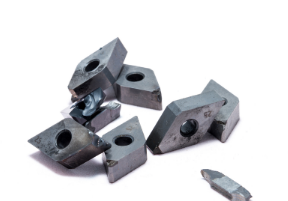
I. Core Challenges in Edge Profile Detection and Limitations of Traditional Lenses

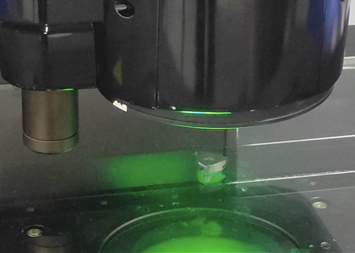
The cutting edge, as the core functional part of cutting tools, typically exhibits an extremely narrow acute angle or curved arc shape. During inspection, it is necessary to simultaneously capture both the “geometric profile of the cutting edge tip” and the “dimensions where the cutting edge meets the tool body.” Traditional fixed-focus or Vari-focal lenses suffer from two critical flaws:
- Perspective distortion and parallax error: Traditional lenses follow the principle of central perspective imaging. When there is a slight deviation in the distance between the measured cutting tool and the lens (e.g., due to tilted workpiece placement or conveyor vibration), the cutting edge exhibits “near-large, far-small” distortion. The tip contour becomes stretched or compressed, leading to measurement deviations in chamfer angle and cutting edge thickness from actual values.
- Insufficient Edge Sharpness: The width of cutting edge tips typically measures in micrometers. Conventional lenses exhibit weak edge resolution, making it difficult to clearly distinguish minute chipping at the tip from normal contours. This often leads to missed or misidentified defects.。
These limitations prevent traditional lenses from meeting the factory inspection requirements for high-precision cutting tools, particularly rendering them unsuitable for high-end manufacturing sectors such as cutting tools and precision molds.
II. Core Technical Advantages of POMEAS Telephoto Lenses for Edge Profile Detection
POMEAS telecentric lenses are categorized into three major series: object-side telecentric, image-side telecentric, and dual-side telecentric. Among these, dual-side telecentric lenses deliver optimal performance in edge detection, with technical advantages precisely tailored to meet edge detection requirements:
- Zero perspective distortion, precise dimension measurement without deviation. In the optical path design of telecentric lenses, the principal rays remain parallel to the lens optical axis, and the magnification ratio is independent of the object distance. Regardless of how the cutting tool is positioned within the inspection field of view, the geometric contour of the cutting edge is imaged at a true 1:1 scale, completely eliminating perspective distortion. For instance, when measuring the chamfer angle of a milling cutter, even with slight misalignment between the cutter's axis and the lens optical axis, the telecentric lens accurately reproduces the true chamfer angle with measurement errors controlled within ±1μm.
- Uniform high resolution across the entire field of view captures micron-level details of cutting edges. POMEAS telecentric lenses utilize low-dispersion optical glass and aspherical lens elements, combined with multi-layer anti-reflective coating technology, to achieve high-resolution imaging without blind spots across the entire field of view. For micron-level chipping or notching defects at the cutting edge tip, the lens clearly reveals the defect's morphology and dimensions, preventing missed inspections due to blurred imaging. Simultaneously, the lens's high-contrast imaging effectively distinguishes between edge and background grayscale differences, making it suitable for inspecting cutting tools made of various materials such as metals and cemented carbides.
- Large depth of field accommodates varying tool thicknesses for enhanced inspection efficiency. Tools exhibit thickness variations (e.g., thin blades vs. thick milling cutters). POMEAS telecentric lenses feature a large depth of field, enabling simultaneous clear imaging of cutting edge profiles across different thicknesses within the same inspection field. This eliminates frequent adjustments to lens focus or workpiece height, significantly boosting production line inspection efficiency.
- Resistant to stray light interference for complex industrial environments Cutting tools are predominantly metallic, causing strong light reflections during inspection. POMEAS telecentric lenses feature optimized internal light-damping structures combined with anti-glare coating technology. This effectively suppresses stray light interference in imaging, prevents halo effects around edge contours, and ensures accurate profile extraction.
III. Typical Application Scenarios of POMEAS Telecentric Lenses in Blade Edge Contour Inspection

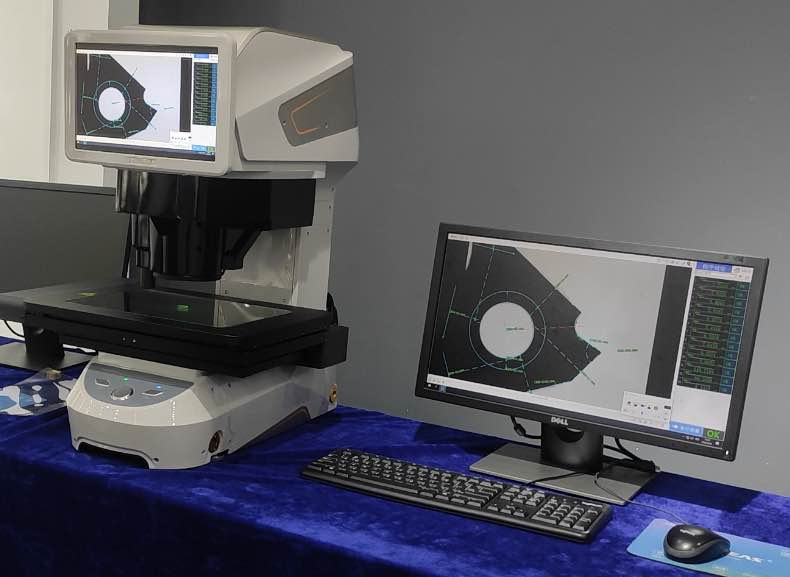
- Tool Edge Inspection: Checks chamfer angles, edge thickness, and tip chipping on cutting tools like turning tools, milling cutters, and drill bits. Integrated with machine vision systems enables automated dimensional measurement and defect detection.
- Precision Mold Edge Inspection: Contour inspection of cavity edges in stamping dies and injection molds ensures dimensional accuracy, preventing burrs and dimensional deviations in stamped and molded parts.
- Blade Product Inspection: Sharpness contour inspection of razor blades and surgical blades identifies minute nicks and curled edge defects.
IV. Technical Support for POMEAS Telecentric Lenses

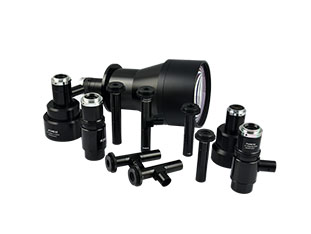
To achieve the integrated implementation of “optical solutions + algorithm adaptation” for cutting edge contour detection, POMEAS offers customized optical path design. Based on tool dimensions and materials, we match the optimal telecentric lens models and lighting solutions (such as ring shadowless lights or coaxial lights). We also provide compatibility testing with mainstream vision systems to ensure the stability and precision of the detection system.
Product recommendation
TECHNICAL SOLUTION
MORE+You may also be interested in the following information
FREE CONSULTING SERVICE
Let’s help you to find the right solution for your project!
 ASK POMEAS
  PRICE INQUIRY
  REQUEST DEMO/TEST
  FREE TRIAL UNIT
  ACCURATE SELECTION
- APPICATION CASE
- RESOURCE CENTER
- DOWNLOAD CENTER
SOLUTIONS SUPPORT
- ZOOM LENS SELECTION TOOL
- TELECENTRIC LENS SELECTION TOOL
- FA LENS SELECTION TOOL
- ZOOM RATIO TABLE
- CERTIFIED MODEL
SELECTION TOOL
- WHY POMEAS
- FAQ
- PRIVACY POLICY
- TERMS OF USE
- DELIVERY & RETURN POLICY
CUSTOMER CARE
 ADDRESS
Add.:No.68, Chongwei Road, Baizhoubian, East district, Dongguan, China, 523000
CONTACT
 Tel:+ 86-0769-2266 0867
 Fax:+ 86-0769-2266 0867
 E-mail:marketing@pomeas.com

Wechat QR code

Software Copyright :2021SR0176001 抄袭必究, 技术支持:誉新源科技