


Differences Between Telecentric Measurement System and Image Measuring Instruments
The online projection measuring instrument overcomes the limitations of traditional image measuring instruments in terms of speed, real-time capability, operational convenience, and functional scalability through high-speed measurement, intelligent operation, multi-dimensional inspection, and production line integration capabilities. It has become the core quality control equipment in the era of smart manufacturing.

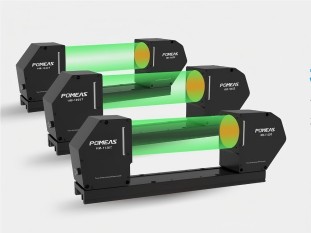
I. Measurement Speed and Real-Time Capability: The Core Differentiator of Full Inspection on Production Lines
1. Telecentric Measurement System

-
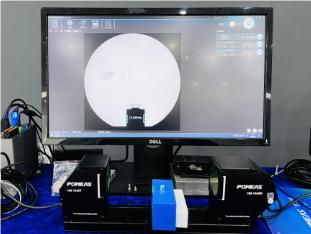
Speed Advantage: Leveraging dual telecentric measurement heads, green LED parallel light, and high-speed image processing technology, single measurement time is reduced to 35ms. This enables real-time inspection of hundreds of parts per minute, meeting the requirements for 100% inspection on production lines.
-
Real-Time Feedback: Measurement results are instantly displayed and transmitted to the control system. This automatically triggers alarms or sorting devices, achieving a closed-loop “measure-decide-execute” process. This prevents defective batches from entering subsequent processes.
2. Traditional Image Measuring Instrument

-
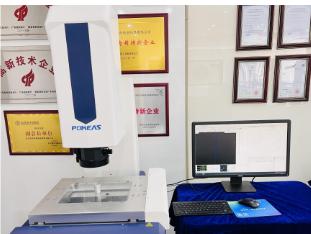
Speed Limitations: Constrained by mechanical motion, image acquisition, and software processing workflows, single measurement cycles typically take 1–5 seconds, making it difficult to meet the demands of high-speed production lines.
-
Spot-Check Mode: Primarily used in laboratories or offline inspections, requiring manual sampling and clamping. This approach cannot cover all products, posing a risk of missed inspections.
-
Data Latency: Measurement results require manual recording or export, preventing real-time intervention in the production process.
II. Operational Convenience: The Leap from Complexity to Intelligence
1. Telecentric Measurement System

-
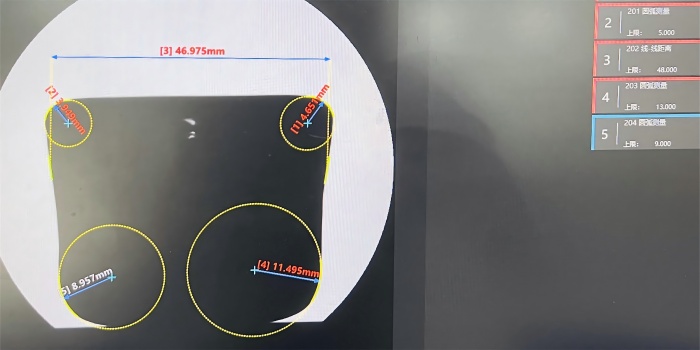
Place and Measure: Automatically identifies workpiece features via preset programs or AI algorithms, eliminating manual adjustments to light sources, lenses, or coordinate systems.
-
Batch Duplication: Supports duplicating measurement tools in any quantity, orientation, or spacing to streamline setup for complex workpieces.
-
Automatic Offset Correction: Ensures measurement accuracy through image matching algorithms even when workpiece positioning shifts.
2. Traditional Image Measuring Instrument

-
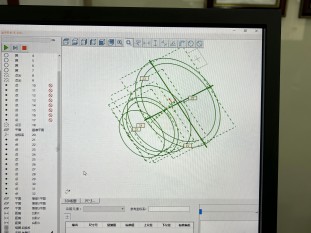
Manual operation dependency: Requires manual adjustment of light source brightness, lens magnification, and workpiece positioning, demanding significant operator experience.
-
Complex coordinate system setup: Requires manually aligning the system or importing CAD models to establish the coordinate system, which is time-consuming and prone to errors.
-
Limited functionality expansion: While supporting contact probes or laser probes, additional calibration is required, increasing operational complexity.
III. Functional Scalability: From Single Measurement to Multi-Parameter Detection
1. Telecentric Measurement System
-
Multi-functional inspection capabilities: Beyond dimensional measurement, it supports standard contour comparison, defect distance measurement, and more.
-
AI-powered: Utilizes deep learning algorithms for automatic classification and statistical analysis, providing data support for quality control.
-
Integrated design: Seamlessly interfaces with automated production lines, robots, or MES systems to achieve full-process automation from “measurement-analysis-feedback.”
2. Traditional Image Measuring Instrument
-
Relatively limited functionality: Primarily focused on dimensional measurement, requiring external software or manual calculations for geometric tolerance analysis.
-
Restricted data output: While supporting formats like Excel and Word, it lacks real-time data analysis and visualization capabilities.
-
High expansion costs: Adding contact probes or laser probes necessitates additional investment and requires system recalibration.
Product recommendation
TECHNICAL SOLUTION
MORE+You may also be interested in the following information
FREE CONSULTING SERVICE
Let’s help you to find the right solution for your project!
 ASK POMEAS
  PRICE INQUIRY
  REQUEST DEMO/TEST
  FREE TRIAL UNIT
  ACCURATE SELECTION
- APPICATION CASE
- RESOURCE CENTER
- DOWNLOAD CENTER
SOLUTIONS SUPPORT
- ZOOM LENS SELECTION TOOL
- TELECENTRIC LENS SELECTION TOOL
- FA LENS SELECTION TOOL
- ZOOM RATIO TABLE
- CERTIFIED MODEL
SELECTION TOOL
- WHY POMEAS
- FAQ
- PRIVACY POLICY
- TERMS OF USE
- DELIVERY & RETURN POLICY
CUSTOMER CARE
 ADDRESS
Add.:No.68, Chongwei Road, Baizhoubian, East district, Dongguan, China, 523000
CONTACT
 Tel:+ 86-0769-2266 0867
 Fax:+ 86-0769-2266 0867
 E-mail:marketing@pomeas.com

Wechat QR code

Software Copyright :2021SR0176001 抄袭必究, 技术支持:誉新源科技