


Laser autofocus microscopy systems, as an advanced technology in modern microscopic imaging, demonstrate significant advantages across multiple fields including scientific research, industrial inspection, and medical diagnostics due to their unique laser focusing mechanism. These advantages are specifically manifested in the following aspects:

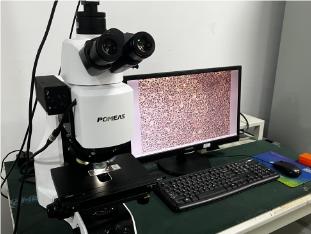
1. Extremely fast focusing speed enables efficient observation.
- Instantaneous Response: Laser focusing achieves millisecond-level adjustment by emitting laser beams and detecting reflected signals, far surpassing the speed of traditional mechanical or manual focusing. For instance, in live cell dynamics observation, the system captures rapid processes like cell division and migration in real time, preventing image blurring or data loss caused by focusing delays.
- Continuous Tracking Capability: For moving samples—such as particles in microfluidics or the wing movements of flying insects—laser focusing continuously tracks the focal position. This ensures every frame remains sharp and clear, delivering reliable data for dynamic behavior analysis.
2. Focusing accuracy reaches the sub-micron level, enhancing imaging quality.
- High-resolution support: Laser focusing typically achieves precision down to 0.1 micrometers or higher. When paired with high-magnification objectives (e.g., 100× oil immersion), it enables clear visualization of minute structures such as organelles and nanoparticles, meeting the detailed observation demands of fields like biomedical science and materials science.
- Strong Anti-Interference Capability: Unlike image contrast-based focusing (which is susceptible to sample surface texture or uneven illumination), laser focusing directly determines the focal position by measuring optical path differences. This method remains unaffected by sample color, reflectivity, or transparency, ensuring precise focusing accuracy.
3. Overcoming sample transparency limitations to broaden application scope
- Adaptation for Opaque Samples: Traditional optical microscopes rely on transmitted light imaging and are ineffective for opaque samples such as metals and ceramics. The laser autofocus system operates using reflected light signals, enabling direct observation of surface topography on opaque samples (e.g., chip circuits, metal corrosion pits), filling a gap in conventional technology.
- Thick Sample Penetration Capability: Combined with confocal or light-sheet illumination techniques, laser autofocus enables multi-layer scanning for three-dimensional reconstruction of thick tissues (e.g., tumor sections, plant stems), revealing internal structural heterogeneity.
4. The ideal tool for dynamic experiments, capturing instantaneous changes
- High-Speed Imaging Compatibility: When paired with high-speed cameras (thousands of frames per second), laser focusing enables stable tracking of rapidly moving specimens (e.g., heartbeats, neuronal discharges), preventing image distortion caused by focus drift. This provides critical technical support for physiology and fluid dynamics research.
- Environmental Adaptability: In complex environments with temperature fluctuations and vibration interference (e.g., industrial production lines, field observations), laser focusing automatically compensates for external disturbances through a closed-loop feedback mechanism, maintaining stable imaging and making it suitable for long-term dynamic monitoring.
5. A powerful tool for observing complex samples, simplifying operational procedures
- Non-uniform sample handling: For samples with uneven surfaces (e.g., rock fractures, biological tissues) or complex compositions (e.g., composite materials, multiphase fluids), laser focusing automatically adapts to local height variations without manual segmentation adjustments, significantly enhancing observation efficiency.
- Automation Integration Potential: The laser focusing module integrates seamlessly into automated microscopy platforms. When linked with image analysis software, it enables full-process automation—from sample scanning and focusing to imaging and data analysis—reducing manual intervention and minimizing operational errors.
6. Reduce human error and enhance data reliability
- Standardized Operation: Manual focusing is susceptible to operator experience and fatigue, leading to variations in experimental results across different batches. Laser autofocus employs algorithmic control to ensure consistent experimental conditions each time, enhancing data repeatability and comparability.
- Long-Term Stability: During prolonged experiments (such as cell culture monitoring or material fatigue testing), laser focusing maintains stable operation continuously. This prevents focus drift caused by human oversight, safeguarding data quality throughout the entire experimental process.
Product recommendation
TECHNICAL SOLUTION
MORE+You may also be interested in the following information
FREE CONSULTING SERVICE
Let’s help you to find the right solution for your project!
 ASK POMEAS
  PRICE INQUIRY
  REQUEST DEMO/TEST
  FREE TRIAL UNIT
  ACCURATE SELECTION
- APPICATION CASE
- RESOURCE CENTER
- DOWNLOAD CENTER
SOLUTIONS SUPPORT
- ZOOM LENS SELECTION TOOL
- TELECENTRIC LENS SELECTION TOOL
- FA LENS SELECTION TOOL
- ZOOM RATIO TABLE
- CERTIFIED MODEL
SELECTION TOOL
- WHY POMEAS
- FAQ
- PRIVACY POLICY
- TERMS OF USE
- DELIVERY & RETURN POLICY
CUSTOMER CARE
 ADDRESS
Add.:No.68, Chongwei Road, Baizhoubian, East district, Dongguan, China, 523000
CONTACT
 Tel:+ 86-0769-2266 0867
 Fax:+ 86-0769-2266 0867
 E-mail:marketing@pomeas.com

Wechat QR code

Software Copyright :2021SR0176001 抄袭必究, 技术支持:誉新源科技