


1. What is an APO lens?

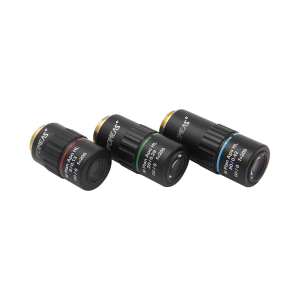
APO lenses are apochromatic lenses whose core function is to eliminate axial chromatic aberration across three or more colors through optical design. Traditional lenses suffer from chromatic aberration due to differences in refractive index across wavelengths, preventing the three primary colors—red, green, and blue—from converging at the same focal point. This results in color fringing (such as the “purple fringing” visible in photographs). APO lenses achieve chromatic correction through the following technologies:
1. Material Innovation: Utilizing ultra-low dispersion glass containing rare earth elements (such as fluorite or synthetic crystals) or specialized composite lenses (like Sigma's SLD/ELD elements) significantly reduces the dispersion coefficient.
2. Structural Optimization: Through multi-element lens combinations (e.g., the three-element Cooke Triplet structure), simultaneous focal correction is applied to red, green, and blue primary colors, converging them onto a single plane. For instance, Zeiss APO lenses achieve a resolution range from 5 micrometers to 0.34 micrometers in microscopy applications.
3. Performance Enhancement: In telephoto lenses, APO technology eliminates chromatic aberration amplification caused by extended focal lengths, improving image sharpness and color fidelity. For instance, the Zeiss APO telephoto lens in the vivo X100 Pro meets certification standards, delivering precise color reproduction even at 100x digital zoom.
II. What is an interference lens?
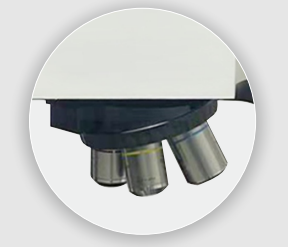
An interferometric lens is an optical system designed based on the principle of light interference. Its core function involves generating interference patterns through the superposition of two coherent light beams, thereby extracting information such as object morphology, thickness, or refractive index. Typical application scenarios include:
White Light Interferometer: Utilizing the short coherence length of white light (a broad-spectrum light source), a beam splitter divides the light into two beams—one illuminating the object under test, the other serving as a reference beam. After reflection, the two beams recombine to form interference fringes containing height information of the object. For example, the POMEAS 3D White Light Interferometer achieves sub-nanometer surface roughness measurement by analyzing the phase difference of these interference fringes.
Key characteristics of interference lenses include:
-
Coherence Requirements: Monochromatic light or a short-wavelength coherent light source (such as white light) must be used to generate clear interference fringes.
-
Precision Adjustment: The optical path must be strictly calibrated to ensure the optical path difference between the two beams remains within the coherence length range.
-
Application Fields: Primarily used in metrology testing (e.g., measuring the surface topography of semiconductor wafers), optical component testing (e.g., determining the radius of curvature of lenses), and scientific research experiments (e.g., analyzing thin film thickness).
III. Is the APO lens an interference lens?
1. APO Lenses ≠ Interferometric Lenses: APO lenses optimize imaging quality by correcting chromatic aberration, while interferometric lenses extract object information through interference phenomena. Their underlying principles and functions are fundamentally different.
2. Complementary Application Scenarios: In precision inspection, APO lenses can work synergistically with interferometric lenses. For example, APO objectives in microscopes provide high-resolution imaging, complementing interferometers to achieve nanoscale surface topography measurements.
3. Technological Convergence Trends: As optical technology advances, some high-end equipment (e.g., semiconductor inspection systems) may integrate both APO correction and interferometric measurement capabilities. However, these remain distinct modules without a direct technological substitution relationship.
Product recommendation
TECHNICAL SOLUTION
MORE+You may also be interested in the following information
FREE CONSULTING SERVICE
Let’s help you to find the right solution for your project!
 ASK POMEAS
  PRICE INQUIRY
  REQUEST DEMO/TEST
  FREE TRIAL UNIT
  ACCURATE SELECTION
- APPICATION CASE
- RESOURCE CENTER
- DOWNLOAD CENTER
SOLUTIONS SUPPORT
- ZOOM LENS SELECTION TOOL
- TELECENTRIC LENS SELECTION TOOL
- FA LENS SELECTION TOOL
- ZOOM RATIO TABLE
- CERTIFIED MODEL
SELECTION TOOL
- WHY POMEAS
- FAQ
- PRIVACY POLICY
- TERMS OF USE
- DELIVERY & RETURN POLICY
CUSTOMER CARE
 ADDRESS
Add.:No.68, Chongwei Road, Baizhoubian, East district, Dongguan, China, 523000
CONTACT
 Tel:+ 86-0769-2266 0867
 Fax:+ 86-0769-2266 0867
 E-mail:marketing@pomeas.com

Wechat QR code

Software Copyright :2021SR0176001 抄袭必究, 技术支持:誉新源科技