


In the field of industrial vision inspection, the lens serves as the bridge connecting the physical world to digital imagery. When faced with diverse inspection requirements across different scenarios, how can one accurately select the right lens from standard FA lenses, telecentric lenses, macro lenses, and line scan lenses? This article will help newcomers quickly establish a selection logic through comparative analysis of typical application scenarios.

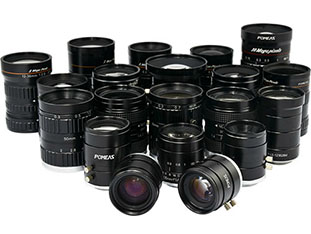
I. Standard FA Lenses: The “Jack-of-All-Trades” in Industrial Automation

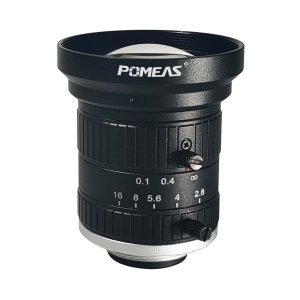
1. Core Advantages: Large Aperture, High Cost-Performance Ratio, Strong Adaptability
2. Typical Scenarios:
- Surface Defect Detection: In industries such as 3C electronics and automotive components, FA lenses leverage their large aperture design to capture surface defects like scratches and pits under low-light conditions. For instance, during anodized layer inspection on smartphone frames, FA lenses can clearly reveal minute imperfections as small as 0.01mm.
- Rough Dimensional Inspection: For dimensional measurements with lower precision requirements (e.g., packaging dimensions, mechanical part contours), FA lenses achieve rapid imaging through fixed focal lengths. Combined with simple algorithms, they complete inspections efficiently.
- Logistics Sorting: In scenarios like barcode recognition and shape classification for express parcels, FA lenses enable dynamic capture at high frame rates (up to 120fps), boosting sorting efficiency.
3. Key Selection Criteria:
- Prioritize C-mount (focal length < 25mm) or F-mount (focal length ≥ 25mm) to match the camera's sensor size;
- Calculate the focal length based on working distance (WD) and field of view (FOV) using the formula: f = WD × CCD size / FOV;
- Distortion must be controlled within 1% to prevent affecting measurement accuracy.
II. Telephoto Lenses: The Gold Standard for Precision Measurement

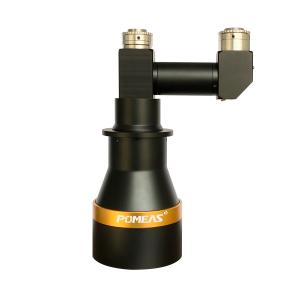
1. Core Advantages: Low distortion, high depth of field, stable magnification
2. Typical Scenarios:
- High-Precision Dimensional Measurement: In semiconductor manufacturing, telecentric lenses are used to measure micrometer-level features such as wafer bond wire pitch and chip pin width. For example, a chip packaging factory achieved measurement repeatability of ±0.5μm by adopting a 0.1X telecentric lens.
- 3D Object Inspection: For parts with holes or complex curved surfaces (e.g., engine turbine blades), telecentric lenses eliminate perspective distortion through parallel optical paths, ensuring aperture diameter measurement errors <0.01mm.
- Deformable Object Inspection: For pressure-sensitive items like rubber seals and plastic films, telecentric lenses' non-contact measurement prevents deformation errors caused by physical contact.
3. Key Selection Criteria:
- Select magnification based on measurement accuracy: 0.1X-0.5X for wide-range measurement, 1X-5X for micro-feature inspection;
- Depth of field must cover object height differences (e.g., ≥5mm for stacked electronic components);
- Prioritize dual-side telecentric design to further reduce distortion (distortion rate <0.05%).
III. Macro Lenses: Magnifying Glasses for the Microcosm

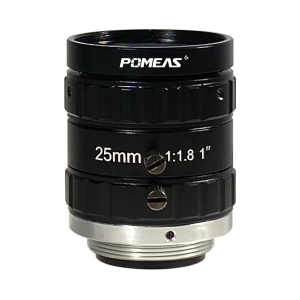
1. Core Advantages: Ultra-high magnification, high resolution
2. Typical Scenarios:
- Micro-defect Detection: In pharmaceutical packaging, macro lenses can detect minute particles (diameter <0.1mm) on the inner walls of medicine bottles, ensuring drug safety;
- Material Surface Analysis: In metal material research, macro lenses are used to observe microstructures such as grain boundaries and corrosion pits, aiding material performance evaluation;
- Biological Sample Imaging: In cell culture monitoring, macro lenses combined with fluorescence imaging technology clearly reveal cellular morphological changes, providing data support for drug development.
3. Key Selection Criteria:
- Magnification must match inspection requirements (e.g., 1X-10X for routine minor defects, 50X-100X for cellular-level observation);
- Working distance must allow sufficient operating space (e.g., ≥50mm when inspecting live cells to avoid interference);
- Use with annular illumination to enhance edge contrast.
IV. Line-Scan Camera: The “Assembly Line Specialist” for High-Speed Inspection

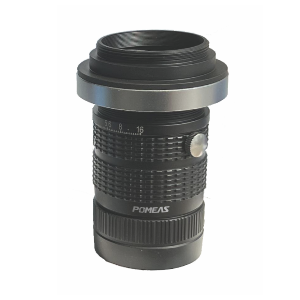
1. Core Advantages: High Resolution, Linear Scanning, Motion Capture
2. Typical Scenarios:
- Large-format inspection: In new energy battery electrode coating inspection, line scan cameras scan electrode sheets up to 1.2m wide at 8K/16K resolution, providing real-time detection of coating thickness uniformity (error <1μm);
- High-Speed Moving Object Inspection: In the textile industry, line scan cameras scan fabric surfaces at 50 meters per second to detect defects (e.g., broken threads, stains), achieving inspection speeds three times faster than area scan cameras;
- Research-grade imaging: In astronomical observation, line scan cameras paired with telescopes scan stellar surfaces to generate high-resolution topographic maps; in materials science, they observe dynamic changes in nanomaterials.
3. Key Selection Criteria:
- Resolution must match detection accuracy (e.g., 8K lenses for 0.1mm-level defects, 16K lenses for 0.01mm-level defects);
- Frame rate must exceed object movement speed (e.g., for inspecting a conveyor belt moving at 10 meters per second, frame rate must be ≥10kHz);
- Used with encoders to achieve pixel-level precision positioning.
V. Model Selection Decision Steps

- Object Size:
- Millimeter range → FA lens;
- Millimeter range → FA lens;
- Meter range → Line scan lens.
- Accuracy requirements:
- Above ±0.1mm → FA lens;
- Above ±0.1mm → Tele-center lens;
- Above ±0.001mm → High-magnification macro lens.
- Motion state:
- Static → All lenses suitable;
- High-speed motion → Line scan lens.
- Budget range:
- Low cost → FA lens;
- Medium cost → Tele-center lens;
- High cost → Line scan lens/High-magnification macro lens.
Product recommendation
TECHNICAL SOLUTION
MORE+You may also be interested in the following information
FREE CONSULTING SERVICE
Let’s help you to find the right solution for your project!
 ASK POMEAS
  PRICE INQUIRY
  REQUEST DEMO/TEST
  FREE TRIAL UNIT
  ACCURATE SELECTION
- APPICATION CASE
- RESOURCE CENTER
- DOWNLOAD CENTER
SOLUTIONS SUPPORT
- ZOOM LENS SELECTION TOOL
- TELECENTRIC LENS SELECTION TOOL
- FA LENS SELECTION TOOL
- ZOOM RATIO TABLE
- CERTIFIED MODEL
SELECTION TOOL
- WHY POMEAS
- FAQ
- PRIVACY POLICY
- TERMS OF USE
- DELIVERY & RETURN POLICY
CUSTOMER CARE
 ADDRESS
Add.:No.68, Chongwei Road, Baizhoubian, East district, Dongguan, China, 523000
CONTACT
 Tel:+ 86-0769-2266 0867
 Fax:+ 86-0769-2266 0867
 E-mail:marketing@pomeas.com

Wechat QR code

Software Copyright :2021SR0176001 抄袭必究, 技术支持:誉新源科技